From Litter Box Retreats to Window Perches—How to Create a Safe Space Your Cat Will Love
Ever Wonder Why Your Cat Is Hiding in the Litter Box?
When Arthur first came to live with us, he was a quiet, watchful community cat who used to sit outside my window with the saddest eyes, gently pawing to come inside. Once he joined the household, he became my sweet, shadowy companion—never far from me, always eager for a chin scratch, and content to nap close by. Looking back, his early behavior helped me realize how deeply cats benefit from the right kind of cat enrichment, especially when adjusting to a new environment.
But Something Was Off.
When I wasn’t in the room, Arthur wasn’t just retreating—he was hiding. Not in a cozy nook or soft bed, but inside the narrow tunnel of the litter box cabinet. Not the box itself, but the small, enclosed hallway leading to it. It wasn’t a choice. It was a coping mechanism.
The Subtle Signs of Discomfort
At first, I didn’t realize what was happening. Cora, my confident beach-dweller, had taken to quietly dominating the shared space—lying casually across the exit of the litter area, blocking Arthur’s path, occasionally swatting him when he tried to pass. What looked like peace was actually low-key bullying.
I separated the litter boxes and added pheromone diffusers, which helped—but Arthur still kept retreating. That’s when I knew he didn’t just need access—he needed ownership. A space of his own.
Creating a Safe Space: Arthur’s Hideaways
I began experimenting with different spots throughout the apartment—each tailored to how Arthur naturally liked to relax and observe:
- Kitchen: A shallow box on the bottom shelf of the Elfa rack by his favorite sunspot.
- Bedroom: The windowsill behind a sheer curtain.
- Living Room: A low shelf under the console table near the window, half-covered by the drape.
Over time, Arthur transformed. By giving him a few dedicated spots to decompress and observe, I was able to meet his need for both emotional safety and indoor cat enrichment.
Giving him access to multiple safe spots was a turning point in his enrichment journey. He now only visits the cabinet to do his business—and can usually be found stretched out behind the curtains, tail swishing, ears alert, watching the world with confidence.
What Your Cat Sees: Hiding vs. Bush-Dwelling
Cats don’t just live on the ground—they experience their environment in 3D. Every space is evaluated for safety, elevation, and line of sight. Confident cats claim territory that lets them observe without feeling exposed.
There’s A Difference Between Hiding And Bush-Dwelling:

A Bush Dweller observes calmly from a partially concealed space—relaxed, whiskers forward, tail still.
A Hiding Cat is crouched, tense, trying to disappear—ears flattened, pupils dilated, tail tucked in tightly.
Knowing which you’re seeing helps guide how to support your cat’s emotional well-being.
The Three Confident Cat Types
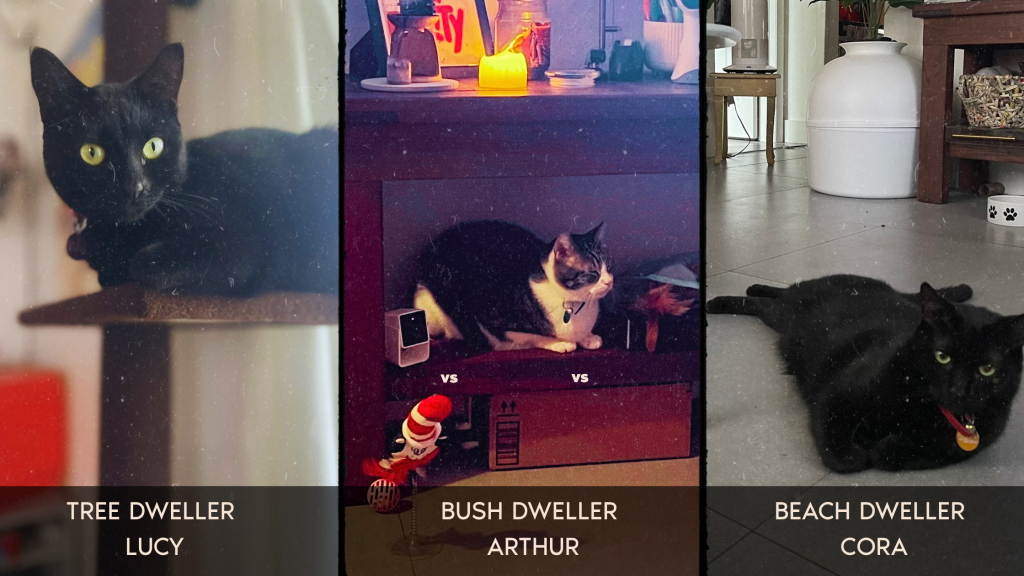
In my last post, I introduced you to Lucy, my Tree Dweller—and now, it’s time to talk about Arthur, my Bush Dweller.
To recap for those who missed it: Jackson Galaxy describes 3 Feline Personality Types based on where they feel most confident in their environment.
Tree Dwellers are the climbers. They feel safest and most empowered when perched up high—on bookshelves, cabinets, or the tops of couches—where they can observe without being touched.
Bush Dwellers prefer to stay low to the ground, often under tables, behind plants, or tucked into corners. They like to be partially hidden but still able to watch what’s happening around them.
Beach Dwellers, like my Cora, boldly take up space right in the open. These cats tend to lie in walkways, hallways, or smack in the middle of the action. Cora, for example, often sprawls on my black shag bath mat—right where I’m likely to trip over her. She owns her space unapologetically and expects the rest of us to adjust.
Understanding what kind of “Dweller” your cat is can help you set up your home in a way that supports their confidence and natural instincts
When Hiding Is Healthy: A Key Part of Cat Enrichment
Not all hiding is a sign of stress. In fact, hiding is part of the natural feline experience. Cats are both predators and prey in the wild, and even in our homes, they instinctively seek out small, dark, and enclosed spaces to rest, observe, or play. Hiding can be comforting, fun, or a strategic move in their own version of “cat and mouse.”
Here are a few common, healthy reasons cats may hide:
Cats are naturally both predator and prey, and use hiding spots in play to stalk their “prey”—which might just be a dust bunny or a dancing beam of light on the wall.
Resting in a quiet spot during loud activities or visitors.
Enjoying a warm or dark space that feels safe.
Taking breaks from overstimulation in multi-cat households.
Providing indoor cat enrichment options like hideaway beds, cat tunnels, or window cubbies supports your cat’s need to feel secure while still staying mentally and physically engaged.
Our Favorite Cat Enrichment Picks: Hideaways for Comfort and Play
Note: The product suggestions below aren’t affiliate links—we don’t receive any compensation for sharing them. These picks are simply tried, tested, and loved by us, our clients, and most importantly… our cats. Our goal is always to support fellow pet parents with thoughtful recommendations that make life better for your furry family members.
Cat Tunnels
Great for play and privacy. Tunnels can serve double duty as both rest areas and active enrichment.
As a professional Miami cat sitter, I’ve gifted tunnels to several clients’ furry families—especially in multi-cat homes where confidence levels and personalities vary. One of my latest stories comes from a household with three cats—only one had shown much interest in toys before. But once the tunnel was introduced, it became a hit. Rosie claimed it first, curling up inside it to nap and later using it as her launchpad for wand toy play. It quickly became her safe zone for both rest and pouncing practice.
Learn More About Our Enrichment Visits

Under $25
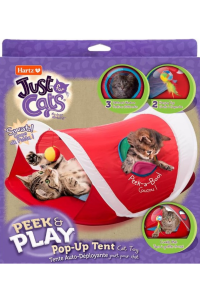
What we love: This was one of the first tunnels I bought when I rescued Cora back in 2018. It’s held up for years—even with regular sun exposure through the windows. She and Lucy have spent countless hours pouncing, stalking, and playing peek-a-boo through the different holes. The crinkle mat adds sensory fun, and the dangling toys provide easy play options. It’s compact, lightweight, and perfect for apartments or small spaces.
Drawbacks: Larger cats might find the tunnel a bit snug at only 22 inches long. It works best as a cozy nook for petite or younger cats.
Under $25
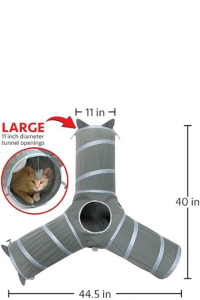
What we love: This one shines in multi-cat homes. The neutral colors blend in with modern decor, and the 11” openings accommodate most cat sizes. It’s a great option if your cats love to curl up together—or if they need their own side of the “bed.”
Drawbacks: It does take up a bit of floor space (40″x44″), so it’s best for larger rooms or dedicated cat areas.
Under $50
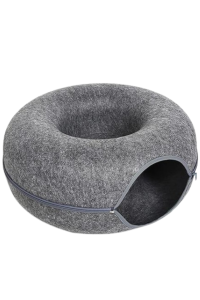
What we love: This one’s a hybrid—it’s a tunnel, a donut bed, and a scratch-safe hideaway all in one. Ideal for cats up to 30 lbs, it’s soft yet durable and perfect for lounging, napping, or playing hide-and-seek. The structure holds up well even with daily use, and it comes in multiple colors.
Drawbacks: Its 24” x 24” size makes it less ideal for tighter spaces. But if you have the room, it’s a great addition to your indoor cat enrichment setup.
Cat Beds, Caves & Cubbies
Looking for stylish yet functional cat furniture Miami homes will love? These beds, caves, and cubbies offer both comfort and design-forward features your cat will appreciate.
Semi-enclosed beds and caves allow cats to feel secure while still stretching out and relaxing.
Pro tip: size matters. It needs to be cozy and semi-private, but give them enough room to sit upright or stretch out if they want to.

Under $100
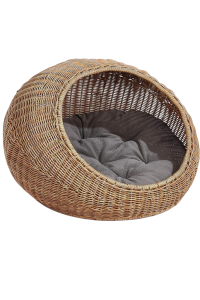
What we love: Aesthetically pleasing and functional. The dome tucks nicely between plants or furniture and feels like a natural part of your decor. The removable cushion is easy to clean, and the 13″ front opening is wide enough for seniors or larger cats. It’s sturdy, stylish, and generously sized.
Drawbacks: It’s made from faux rattan, so if you’re looking specifically for natural materials, you may want to explore alternatives.
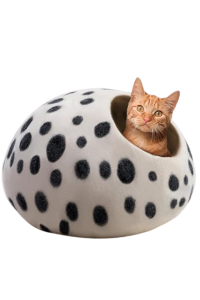
Under $50
What we love: Handmade from organic Merino wool, these caves are soft, naturally insulating, and eco-conscious. They’re lightweight and smooshable, which means they can double as a mat if your cat prefers that. I love this for younger or more timid cats who like to nest.
Drawbacks: The 9″ opening may be too snug for larger cats. Since it’s hand-wash only, it does require a bit of extra care.
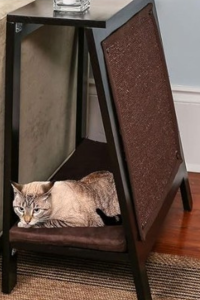
Under $150
What we love: I recommend this for cat parents in smaller homes who want something functional and modern. It works as both a side table and a private nook for your cat. The scratcher base is a bonus. The design is smart and easy to clean, and cats seem to love being “near but hidden.”
Drawbacks: It has a taller, narrow footprint (23.6″ x 14.8″ x 28″), so you’ll want to check that it fits comfortably in your space.
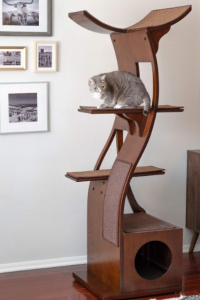
Cat Cubbies & Towers
The right hideaway can be a powerful part of your cat enrichment setup at home.

Under $500
What we love: If you have multiple cats, this is a showstopper. With four levels and a cushioned cubby at the base, it offers both vertical climbing and restful retreat. The sleek design blends into upscale interiors, and the cushions and carpet pieces are removable for easy cleaning.
Drawbacks: It’s heavy (78 lbs.) and best for homes where it can stay in place. But it’s incredibly durable and worth the investment.
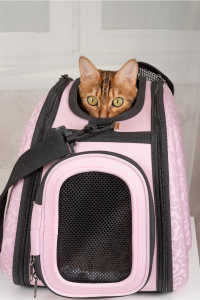
Cat Enrichment at Home: Turn the Carrier Into a Safe Space

PRO TIP: I have several long-term clients whose cats have come to treat their carriers as a safe little den rather than a dreaded vet box. That shift made a world of difference during annual check-ups and emergencies.
One of the biggest factors? Choosing a carrier with a large top entry. It lets the vet examine the cat without forcing them out and gives the cat more visibility and control. Add a cozy fleece blanket and leave the carrier out where your cat can use it anytime. Over time, they may start napping inside—and that’s a good sign.
Want to make this shift at home? See Full Guide: Fear Free Vet Visits
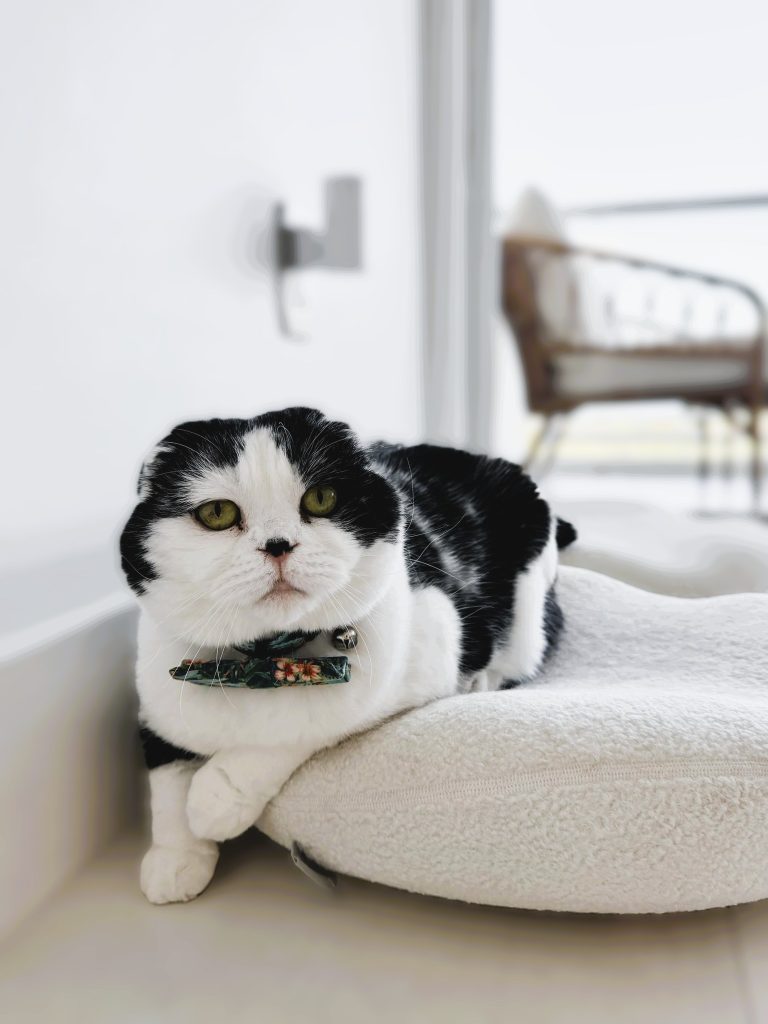
Final Thoughts: Choosing the Right Hideaway for Your Cat
Ask yourself:
Does your cat prefer high or low spots?
Do they like to be near you but with a barrier?
Do they curl up tightly or sprawl out?
Match their behavior with the right kind of cat furniture—from elevated perches to semi-enclosed beds. By offering enriching spaces tailored to their comfort, you’ll help your cat feel more secure, confident, and calm in their home territory.
Thoughtful cat enrichment isn’t just about toys—it’s about shaping your home to reflect how your cat experiences the world.
Ready to create your cat’s perfect hideaway? Explore our curated indoor cat enrichment picks and let your Miami cat rest and play with confidence.
If you missed our last post in the Cat Enrichment Picks series, we explored vertical climbing spaces and why elevated territory matters—especially for Tree Dwellers. Read the previous post Best Cat Tree for Small Apartment – Miami Cat Sitting Picks
Stay tuned for the next post in our Cat Enrichment Picks series: Scratchers and the Emotional & Physical Benefits They Offer Your Cat.