

Proudly serving Miami neighborhoods: Miami Shores, Upper Eastside, Brickell, Midtown, Wynwood, Edgewater & Miami Beach.
Text Us to confirm your neighborhood.

A Beautiful View, Serious Risk: Balcony Safety for High-Rise Cats

Your cat doesn’t have to be adventurous — or even interested in the edge — for a balcony accident to happen. Here’s what Miami cat parents should know about high-rise syndrome and keeping cats safe in high-rise homes.
View from a high-rise balcony in Brickell overlooking downtown Miami, Biscayne Bay, and surrounding condominium towers.

What Miami cat parents should know about high-rise syndrome

Miami high-rise living comes with some incredible views. Floor-to-ceiling windows, sunny balconies, and waterfront views are part of what makes condo living here so appealing.

From Brickell and Edgewater to Wynwood, Downtown, and Miami Beach, high-rise living is part of everyday life for many Miami cat families.

For cat parents, though, those same spaces come with a risk that can be surprisingly easy to underestimate.

As a professional cat sitter in Miami, I spend a lot of my days caring for cats in high-rise homes. And when the subject of balcony safety comes up, I often hear some version of:

“My cat would never go near the edge.”

Or maybe:

“She’s too lazy.”
“He’s older and hardly jumps anymore.”
“She just likes to lie in the sun.”
“He’s actually afraid of the edge.”

Those things may all be true.

But your cat doesn’t have to be reckless, adventurous, or interested in the edge to fall.

Sometimes, all it takes is one unexpected moment.

What Is High-Rise Syndrome in Cats?

High-rise syndrome is the term used to describe injuries cats sustain after falling from an elevated location such as a balcony, window, terrace, or fire escape.

Despite the old saying, cats do not always land safely on their feet.

Cats have an impressive ability to orient themselves during a fall, but that does not protect them from serious injury. A fall from a balcony or window can result in broken bones, chest or abdominal injuries, facial trauma, and other injuries that require emergency veterinary care.

Just as importantly, most cats are not deliberately jumping from high places.

A fall can happen when a cat loses their footing, becomes focused on something nearby, or reacts suddenly to something unexpected.

Which brings us to the part that matters most.

Can a Calm or Older Cat Still Fall From a Balcony?

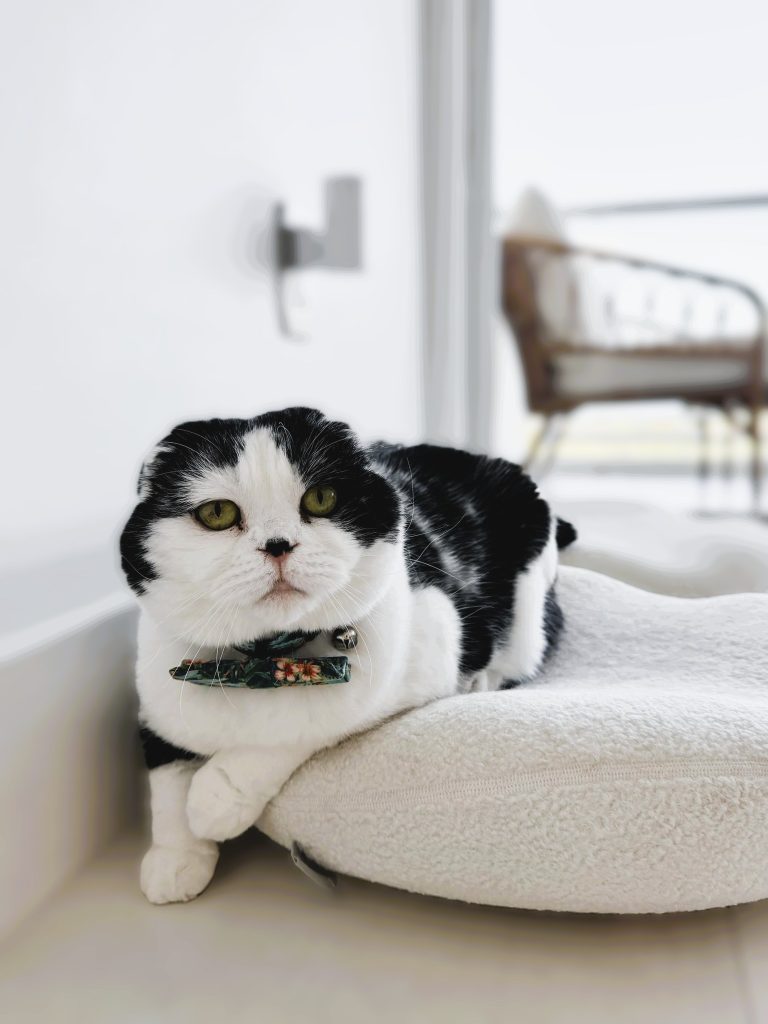
Indoor cat resting on a soft perch beside a floor-to-ceiling window in a Miami high-rise, enjoying the city view safely from inside.

Yes. A cat does not have to be adventurous, young, or interested in the edge to have a balcony accident.

Living with a cat means getting to know their routines incredibly well.

You know where they nap. What they chase. What they ignore. Whether they are adventurous or cautious. And after watching the same behavior day after day — sometimes for years — it is natural to feel confident about what your cat will or will not do.

But past behavior is not a physical barrier.

Your Cat Doesn’t Have to Be a Daredevil

A normally relaxed cat might suddenly react to:

  • A loud or unfamiliar noise

  • An insect flying past

  • A bird flying or landing nearby

  • Something dropping or moving unexpectedly

  • A door opening behind them

  • Being startled from sleep

  • Losing their footing while stretching, jumping, or repositioning themselves

Even a cat who is normally afraid of the edge can react instinctively when startled.

In that moment, they are not stopping to calculate which direction is safest.

That is why I look at balcony safety the same way I look at other types of cat-proofing.

We are not protecting cats only from what they usually do. We are protecting them from the one time something unusual happens.

Are High-Rise Balconies Safe for Cats?

An open high-rise balcony should not be considered safe simply because a cat has used it without incident in the past.

Cats are talented climbers. They navigate cat trees, shelves, counters, sofas, and other elevated spaces with impressive confidence.

But a high-rise balcony is a very different environment.

Narrow railings, glass, metal, concrete, outdoor furniture, and open spaces do not necessarily offer the same footing or margin for error as the places your cat climbs inside.

And unlike a missed jump from the cat tree, there may be no second chance to regain their footing after going over a balcony edge.

That is why prevention matters so much.

How Can I Make a High-Rise Home Safer for My Cat?

Indoor cat enjoying a high-rise city view beside a cat tree and fresh cat grass, creating a safe enrichment space near the window.

The safest option is simple: do not allow unrestricted access to an open balcony.

If you would like your cat to enjoy fresh air and sunshine, a properly secured, fully enclosed space gives them those experiences without relying on their behavior to keep them safe.

Cats can also enjoy the sights and sounds of the outdoors from inside. Window perches, cat grass, and bird or nature videos can all add enrichment without balcony access. If your cat enjoys watching birds, I’ve put together long-playing cat TV playlists  on my Miami Cat TV YouTube channel that are easy to leave on while you’re at work or away from home.


Look Beyond the Balcony

Balconies may be the most obvious concern, but fall risks can also include open windows and other unsecured elevated openings.

A few things to keep in mind:

  • Keep balcony and terrace doors closed when your cat does not have safe, enclosed access
  • Make sure any windows that open cannot give your cat access to an unprotected drop
  • Where window screens are present, make sure they are securely fitted and cannot be pushed out
  • If you create a catio or enclosed balcony space, make sure it is fully secured with no openings your cat can get through

Make Sure Everyone in Your Home Knows the Rules

Guests, housekeepers, contractors, maintenance workers, and pet caregivers may not know that a balcony or window needs to remain closed.

If your cat is not allowed outside, make that expectation clear.

A few seconds with a door left open can be enough for a curious — or startled — cat to get somewhere they should not.

Why I Don’t Allow Balcony Access During Cat-Sitting Visits

Indoor cat resting in a window hammock with a high-rise balcony visible beyond the glass, showing a safe way to enjoy sunshine and elevated views indoors.

Cats can still enjoy sunshine, elevated resting spots, and a great view without having access to an open balcony.

My policy while caring for a client’s cats is simple: I do not allow cats access to open balconies or unsecured exterior doors.

Even if your cat regularly spends time on the balcony when you are home, it is not a risk I am willing to take while they are in my care.

Not because I think your cat is reckless.

And not because I think something is likely to happen.

It is because I cannot predict the unexpected.

My job is to care for your cat and return them safely to you. An open high-rise balcony introduces a risk that simply does not need to be there.

If Your Cat Falls, Seek Veterinary Care

If a cat falls from a significant height, they should be evaluated by a veterinarian as soon as possible — even if they initially appear alert, are walking, or seem relatively normal.

Some injuries from a fall are not immediately obvious.

If an accident occurs, get your cat to a safe location, handle them carefully, and contact your veterinarian or the nearest emergency veterinary hospital for guidance.

Frequently Asked Questions About High-Rise Cat Safety

Can Cats Survive a Fall From a High-Rise Building?

Cats can survive falls from significant heights, but survival does not mean they will escape injury.

Falls can cause serious trauma, and any cat who falls from a significant height should be evaluated by a veterinarian promptly.

It is also a good idea to save the name, phone number, and address of a nearby emergency veterinary hospital in your phone before you ever need it. In a frightening situation, it can be difficult to think clearly or search for information quickly, and having those details ready can save valuable time.

My Cat Is Afraid of the Balcony Railing. Is That Enough to Keep Them Safe?

No.

A cat who normally avoids the edge can still move unpredictably if startled, frightened, distracted, or if they lose their footing.

Physical prevention is safer than relying on a cat’s usual behavior.

Is Supervising My Cat on the Balcony Enough?

Supervision can reduce some risks, but it cannot physically prevent a sudden fall.

A fully secured or enclosed outdoor area offers greater protection than an open balcony.

Are Window Screens Enough to Protect a Cat?

Only if they are securely fitted and strong enough that the cat cannot push through or dislodge them.

Screens should be checked regularly for loose frames, tears, or gaps.

I learned this one firsthand with my own cat, Arthur. While watching another cat outside, he leaned against a window screen and both he and the screen went out the window. Thankfully, we weren’t in a high-rise — but it was a good reminder that a screen should never be treated as a safety barrier.

Should My Pet Sitter Let My Cat Onto the Balcony if I Normally Do?

That depends on the caregiver’s policies.

At Miami Cat Sitting & Home Care, cats are not given access to open balconies or unsecured exterior doors during visits because eliminating that risk is part of keeping cats safe while their families are away.

Enjoy the View — Safely

For some cats, safe outdoor enrichment can also include harness-trained walks in a controlled environment.
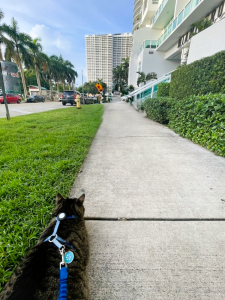
Harness-trained cat enjoying a supervised walk in Edgewater, Miami, as a safe outdoor enrichment alternative to open balcony access.

Living high above Miami does not mean your cat cannot enjoy sunshine, fresh air, and those incredible views.

It simply means creating an environment where one unpredictable moment cannot turn into something devastating.

Because your cat does not have to be reckless to fall.

They only have to be a cat.🐾💙
Share:

Subscribe to Our Newsletter

Sign Up and Receive Updates on Our Events, New Posts, or Exclusive Offers.

More Posts

professional cat sitter building trust with cat during in-home visit in Miami

How Much Does Cat Sitting Cost in Miami?

How much does cat sitting cost in Miami? Here’s what most cat parents can expect for drop-in visits and overnight care, plus what really matters when choosing the right sitter.

Leave a Reply

Your email address will not be published. Required fields are marked *

Essential Care 30-Minute Visit

A reliable 30-minute visit covering your cat’s core needs — meals, fresh water, litter box care, and a brief wellness check. When time allows, the visit may also include a little one-on-one attention or playtime. This flexible service can be scheduled once or multiple times a day based on your cat’s routine.

Priced for 1 cat; +$5 per additional cat.

Perfect For

  • Cats whose needs are primarily meals, fresh water, litter care, and a wellness check
  • Multiple daily visits based on your cat’s feeding and care routine
  • Midday check-ins while you’re at work


What’s Included:

  • Meals & fresh water
  • Litter box scooped
  • Brief socialization & light playtime, as time allows
  • Routine monitoring & wellness check


A simple, steady way to keep your cat’s routine on track.